Science Technician
Kaihangarau Pūtaiao
Alternative titles for this job
Science technicians help scientists carry out research, testing and experiments in areas such as chemistry, earth sciences, life sciences and physical sciences.
Pay
Science technicians usually earn an average of
$52K per year
Source: MBIE, 'Occupation Outlook - Science Technicians', 2019.
Job opportunities

 Vocational Pathways
Pay
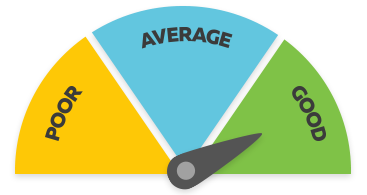
Pay for science technicians varies depending on their type of work, such as agricultural, chemistry, medical, life science or earth science. Science technicians earn an average of $52,000 a year.
Source: Ministry of Business, Innovation and Employment, 'Occupation Outlook – Science Technicians', 2019.
(This information is a guide only. Find out more about the sources of our pay information)
What you will do
Science technicians may do some or all of the following:
- collect and collate data for research
- prepare equipment, materials, products and specimens for experiments and surveys
- perform experiments and evaluate the results
- record experiments and results
- set up, operate and maintain laboratories for teaching and research
- help with or carry out field and site surveys and tests
- write reports and papers on research results
- maintain databases
- order laboratory supplies and equipment.
Skills and knowledge
Science technicians need to have:
- knowledge of a science discipline such as biology, chemistry or physics
- skill in analysing and interpreting research results and other information
- practical skills for performing experiments and operating scientific equipment.
Working conditions
Science technicians:
- usually work regular business hours, but may also work evenings and weekends
- work in laboratories at universities, schools, research institutes and factories. They may also work in offices, glasshouses, nurseries, forests, or on farms
- may travel to work on projects or attend conferences.
What's the job really like?

Janine Ryburn
Science Technician
Watching her babies grow
As a science technician at Landcare Research, Janine Ryburn is responsible for monitoring containers of tiny bacteria that hold the key to unlocking the scientific mystery of how microbes are affected by farming industry run-offs.
Every morning at the lab, she peers into the containers to see how much her "babies" have grown. "This is the best bit of my job right now – finding out whether the growth of my babies confirms what we're looking at in the experiment."
How would you describe your job?
"My job as a technician is similar to that of a nurse who looks after the patients and makes sure everything is going okay.
"So, I'd be ordering supplies, collecting samples from the field, preparing equipment and monitoring the experiment. After that I'd write down the results and hand them over to the scientist, who'd interpret them."
What do you like about the job?
"The day I first felt that I had achieved something was when I learned to extract DNA from bacteria – I find it fascinating to learn new things. If you love doing things practically, and you're well organised, you'll enjoy this job!"
Entry requirements
To become a science technician you need to have a relevant science or technology qualification.
Some employers require you to have a New Zealand Diploma in Applied Science (Level 5 or 6), while others require a Bachelor of Science or a Master's degree in the relevant area of specialisation.
Secondary education
A tertiary entrance qualification is required to enter further training. Useful subjects include maths, biology, chemistry and physics.
Personal requirements
Science technicians need to be:
- good at research
- enquiring and observant
- patient and safety-conscious
- good problem solvers
- good written and verbal communicators
- organised, with good planning skills
- able to work well both individually and as part of a team.
Useful experience
Useful experience for science technicians includes:
- experience in fields related to the area of science you wish to work in
- other science or laboratory work.
Science undergraduates often gain experience by working in a laboratory part time while studying.
Physical requirements
Science technicians usually need to have good eyesight (with or without corrective lenses) and normal colour vision.
Check out related coursesWhat are the chances of getting a job?
Number of science technicians expected to grow slowly
The outlook for science technicians is improving as research funding increases. The number of science technicians is expected to grow slowly until 2025.
Opportunities for science technicians are best in applied sciences that develop new technologies, products and services. The applied areas the Government has prioritised are:
- food research
- biological industries
- health
- environment
- high-value manufacturing and services (for example, making specialised medical equipment).
According to the Census, 4,554 science technicians worked in New Zealand in 2018.
Types of employers varied
Science technicians can work for a range of companies or organisations such as:
- Crown research institutes
- universities, polytechnics and schools
- private sector companies such as private research institutes or processing laboratories.
Sources
- Ministry of Business, Innovation and Employment, '2006-2014 Occupation Data' (prepared for careers.govt.nz), 2015.
- Ministry of Business, Innovation and Employment, 'Occupational Outlook – Science Technicians', 2019.
- Stats NZ, '2018 Census Data', 2019.
- Yahoo News, 'Plant and Food Research to Lead New Research Programme', 13 October 2015.
(This information is a guide only. Find out more about the sources of our job opportunities information)
Progression and specialisations
With three to five years of experience on various projects, a science technician may progress to become a senior or lead science technician.
Those with a Bachelor's degree who gain more experience or further qualifications, such as a Masters or Doctorate, may go on to work as research scientists or engineers.
Science technicians usually specialise in a particular scientific discipline such as:
- Agricultural Technician
- Agricultural technicians perform tests and experiments, and provide technical support to assist agricultural scientists in areas such as research, production, servicing and marketing.
- Chemistry Technician
- Chemistry technicians help chemists and chemical engineers carry out research, testing and experiments on organic and inorganic chemicals. They work with a wide variety of products, including fuels, food, pharmaceuticals, paints, metals, plastics and cosmetics.
- Earth Science Technician
- Earth science technicians collect and test earth and water samples, record observations and analyse data in support of geologists or geophysicists.
- Life Science Technician
- Life science technicians identify and collect living organisms and conduct field and laboratory studies in support of environmental scientists and life scientists such as physiologists, biologists, botanists or zoologists.
- Medical Laboratory Technician
- Medical laboratory technicians help scientists and pathologists take samples, run tests and complete other duties involved in the operation of a diagnostic medical laboratory.
- Research Technician
- Research technicians help scientists carry out research, testing and experiments in a particular area of importance to agriculture. This can include forage crops, pasture, soils, weeds, pests, nutrition, reproduction, animal behaviour, and plant breeding.

Science technicians measure and test chemicals for experiments
Last updated 3 August 2023